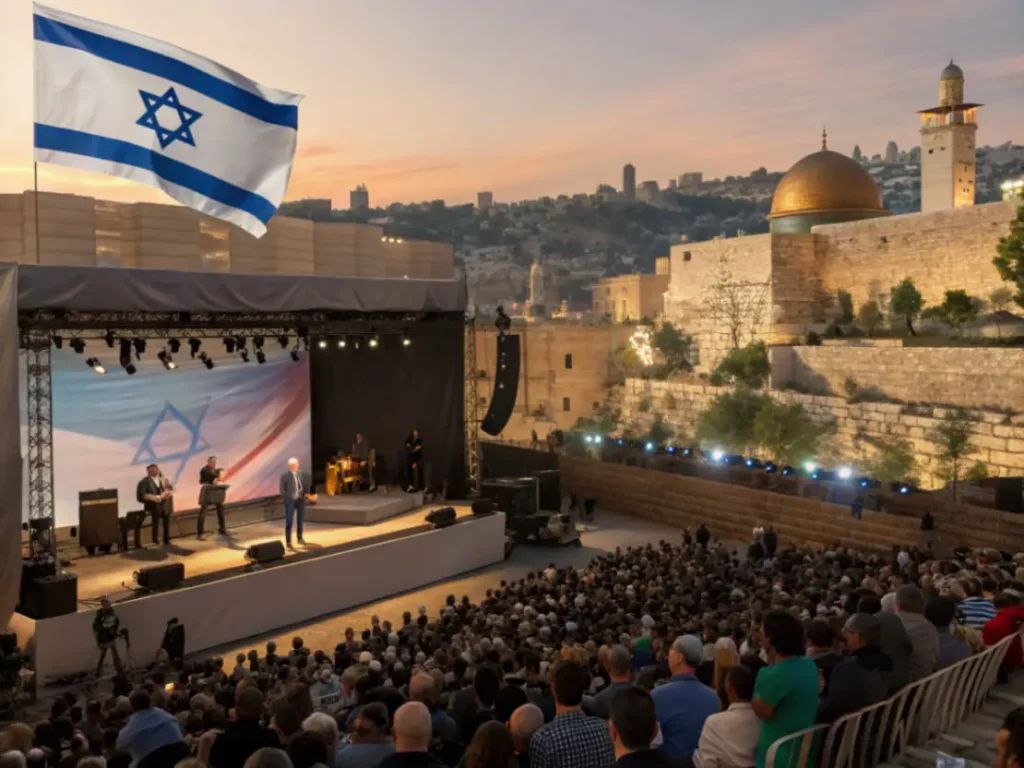
Eurovision 2026 is shaping up to be more than a song contest. As anticipation builds, discussions around Israel’s participation have reignited debates about music, politics, cultural diplomacy, and public perception. The Eurovision Song Contest has always been a platform where pop culture intersects with geopolitics, and in 2026 that intersection appears sharper than ever. The cultural hype surrounding Israel at Eurovision reflects not only artistic expectations but also the broader social and political climate influencing European audiences.
This article explores how Eurovision 2026 became a focal point of cultural discourse, why Israel’s presence sparks intense reactions, and how music, media narratives, and public opinion converge on one of the world’s most watched entertainment events.
The Evolution of Eurovision 2026: From Song Contest to Cultural Arena
Eurovision has transformed significantly since its launch in 1956. Originally conceived as a unifying entertainment project in post-war Europe, the contest gradually evolved into a global spectacle. Eurovision 2026 continues this trajectory, blending high-production pop performances with social messaging and international visibility.
Israel has a long-standing history in the competition, with multiple wins and memorable entries. Its victories in 1978, 1979, 1998, and 2018 positioned the country as an influential participant in Eurovision history. However, participation has often been accompanied by political debate, particularly during periods of heightened regional tension.
In 2026, the cultural narrative extends beyond the performance itself. Social media platforms amplify every rehearsal clip, press conference statement, and artistic choice. Eurovision trends dominate platforms like X, TikTok, and Instagram months before the live shows. As a result, public discourse becomes inseparable from the contest itself.
Eurovision 2026 is no longer just about melody, staging, and choreography. It is also about symbolism, identity, and the question of whether a music competition can remain apolitical in a deeply interconnected world.
Israel at Eurovision 2026: Performance, Betting Odds, and Media Coverage
Before analyzing public reaction, it is important to understand Israel’s competitive positioning in Eurovision 2026. Betting markets, media speculation, and fan polls provide measurable insight into expectations.
Below is an overview of Israel’s historical Eurovision performance and projected 2026 indicators.
| Category | Data |
|---|---|
| First Participation | 1973 |
| Total Wins | 4 |
| Most Recent Win | 2018 |
| Average Final Placement (Last 10 Years) | Top 15 |
| 2026 Betting Odds (Early Season) | Top 10 Contender |
| Social Media Engagement Pre-Contest | High |
Israel’s consistent qualification record demonstrates competitive strength. In recent years, the country has invested in contemporary production, internationally recognized songwriters, and visually dynamic staging. For Eurovision 2026, early industry reports suggest a polished pop entry with cross-market appeal.
Betting odds reflect not only song quality but also narrative momentum. Controversial entries sometimes attract both criticism and curiosity, increasing online engagement. Media coverage tends to frame Israel’s participation through two parallel lenses: artistic evaluation and political context.
This dual framing contributes significantly to the “cultural hype” phenomenon. Even before the semifinal performances, headlines highlight Israel’s entry as one of the most discussed acts of the season. As history shows, strong media attention often correlates with televote mobilization, whether supportive or oppositional.
Public Reaction and Social Media Debate
Public reaction to Israel at Eurovision 2026 illustrates how modern fan culture operates. Eurovision audiences are highly active online, and discourse often begins months before the contest week.
Several core themes dominate online conversations:
- Calls for artistic neutrality and separation of music from politics.
- Campaigns supporting inclusion and cultural dialogue.
- Boycott initiatives driven by geopolitical concerns.
- Defense of Eurovision’s founding values of unity and diversity.
- Debates about the European Broadcasting Union’s eligibility criteria.
These points circulate across digital communities, shaping perception even among casual viewers. Importantly, Eurovision’s voting system combines professional juries and public televoting. Therefore, public sentiment—positive or negative—can directly influence final rankings.
Social media algorithms amplify emotionally charged content. A single statement by an artist or delegation member can generate millions of impressions. In this environment, Eurovision 2026 becomes a digital battleground where cultural identity, activism, and fandom intersect.
However, public opinion is rarely monolithic. While some audiences frame Israel’s participation as controversial, others emphasize the importance of artistic freedom and inclusivity. This polarization contributes to the broader cultural hype: visibility increases as debate intensifies.
Cultural Diplomacy and Soft Power in Eurovision
Eurovision has long functioned as a tool of cultural diplomacy. Countries use the stage to showcase language, aesthetics, fashion, and musical innovation. For Israel, participation serves as an opportunity to present a modern, creative identity to European and global audiences.
Cultural diplomacy operates subtly. A successful Eurovision performance can shift perceptions more effectively than formal political messaging. Songs often communicate universal themes—resilience, love, empowerment—that transcend borders.
In Eurovision 2026, Israel’s strategy appears focused on contemporary global pop production combined with distinctive cultural elements. Such blending allows the entry to appeal broadly while maintaining national identity.
Soft power dynamics become particularly visible when controversy surrounds participation. International coverage expands beyond entertainment sections into political commentary. The result is a paradox: scrutiny increases attention, and attention increases cultural exposure.
From a branding perspective, Eurovision is one of the most powerful media platforms available to participating countries. A single live final attracts hundreds of millions of viewers worldwide. For Israel, Eurovision 2026 represents both a musical opportunity and a strategic communication moment.
The Role of the European Broadcasting Union and Contest Rules
The European Broadcasting Union (EBU) faces complex governance challenges when political tensions intersect with entertainment programming. Eurovision rules emphasize non-political performances, yet geopolitical realities often test these boundaries.
The EBU’s official position consistently stresses inclusivity and broadcaster-based participation criteria. Membership, rather than geographic location alone, determines eligibility. Israel’s broadcaster meets these criteria, allowing continued participation.
In Eurovision 2026, regulatory decisions are scrutinized more intensely than ever. Public petitions, open letters from artists, and advocacy campaigns attempt to influence policy. The EBU must balance freedom of expression with contest neutrality.
Historically, the organization has removed overt political messaging from performances while permitting symbolic artistic expression. This fine line defines the operational framework of Eurovision governance.
The debate surrounding Israel underscores a broader question: can a global cultural event remain insulated from international politics? The EBU’s handling of Eurovision 2026 will likely set precedents for future contests, shaping how cultural institutions navigate controversy in an era of constant online visibility.
Music, Identity, and the Future of Eurovision
At its core, Eurovision remains a music competition. Despite controversies, the winning entry typically reflects strong composition, compelling staging, and broad audience appeal.
The cultural hype around Israel in Eurovision 2026 reveals deeper societal dynamics. Audiences increasingly expect entertainment platforms to reflect ethical considerations. Simultaneously, many viewers seek escapism and creative celebration.
Music possesses a unique capacity to bridge divides. A powerful live performance can momentarily shift discourse away from conflict and toward shared emotional experience. Eurovision history contains numerous examples where unexpected songs unified audiences across ideological lines.
Looking ahead, Eurovision’s future likely involves even greater integration of digital engagement, augmented reality staging, and cross-platform storytelling. Israel’s participation in 2026, regardless of final placement, contributes to this evolving narrative.
Ultimately, Eurovision 2026 demonstrates how cultural events operate within a complex ecosystem of art, media, activism, and diplomacy. The contest remains a reflection of contemporary Europe and its global connections.
Conclusion
Eurovision 2026 and the cultural hype surrounding Israel illustrate the transformation of a music competition into a multidimensional cultural phenomenon. Israel’s participation sparks debate, media attention, and social media engagement, reinforcing Eurovision’s role as both entertainment spectacle and societal mirror.
While controversy may dominate headlines, the essence of Eurovision still lies in performance, creativity, and connection. Whether audiences focus on melody or messaging, the contest continues to unite millions in shared anticipation. In a polarized era, that collective experience remains one of Eurovision’s most enduring strengths.